
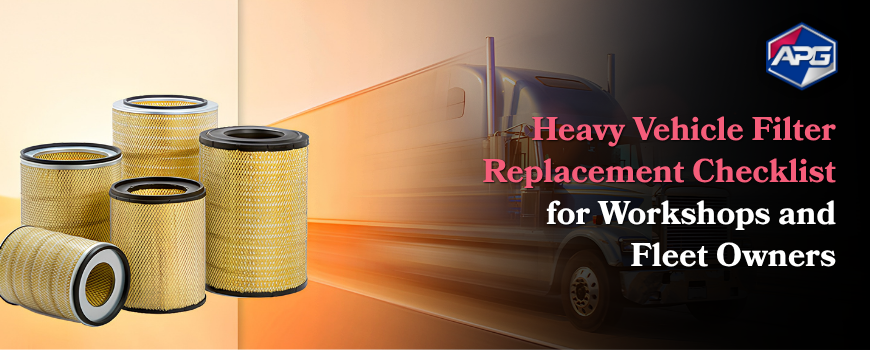
Heavy vehicles work harder than regular cars. Trucks, buses, loaders, generators, tractors, and commercial machines often run for long hours under heavy load. They travel on highways, construction sites, dusty roads, industrial areas, and farm routes. Because of this, their filters get dirty faster and need proper inspection on time.
For workshops and fleet owners, filter maintenance is not a small task. It directly affects engine life, fuel performance, downtime, and repair cost. A blocked air filter, weak oil filter, dirty fuel filter, or poor water separator can create serious problems for heavy-duty engines.
This checklist will help workshops, transport businesses, and fleet managers understand which filters to check and when to replace them.
Why Filter Replacement Matters in Heavy Vehicles
Heavy vehicle engines need clean air, clean fuel, and clean oil to perform properly. Filters protect the engine from dust, metal particles, water, and dirt. When these filters become clogged, the engine has to work harder.
This can cause poor pickup, high fuel consumption, overheating, black smoke, hard starting, engine noise, and unexpected breakdowns. For fleet owners, one vehicle breakdown can delay deliveries, increase repair bills, and affect business operations.
Regular filter replacement keeps vehicles ready for daily work and reduces the risk of sudden failure.
1. Air Filter Checklist
The air filter protects the engine from dust and dirt. Heavy vehicles often drive in dusty environments, so air filters should be checked more frequently.
A dirty air filter can reduce airflow and make the engine feel heavy. It may also increase fuel usage and create black smoke from the exhaust.
Workshop checklist:
Check the air filter for dust, blockage, damage, or oil marks. Inspect the filter housing for leaks or loose fitting. Make sure the filter seal is properly placed. If the vehicle operates in dusty areas, replace the air filter earlier instead of waiting too long.
Fleet owners should especially monitor air filters in vehicles used for construction, cargo transport, agriculture, and off-road work.
2. Oil Filter Checklist
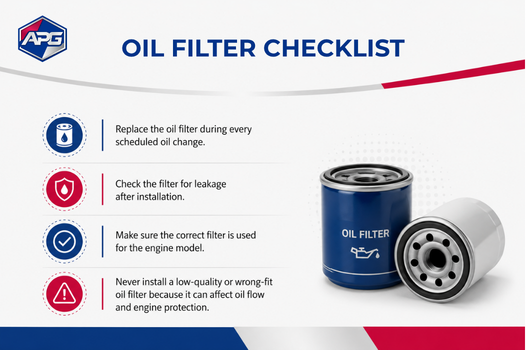
The oil filter helps keep engine oil clean by trapping dirt, metal particles, and carbon deposits. In heavy-duty engines, oil filters play an important role because the engine runs under pressure for long hours.
If the oil filter is old or blocked, dirty oil can affect engine parts. This may increase wear and reduce engine life.
Workshop checklist:
Replace the oil filter during every scheduled oil change. Check the filter for leakage after installation. Make sure the correct filter is used for the engine model. Never install a low-quality or wrong-fit oil filter because it can affect oil flow and engine protection.
For heavy vehicles like Hino, Cummins, Daewoo, FAW, Foton, and Caterpillar machines, always match the filter with the correct model and part number.
3. Fuel Filter Checklist
Fuel filters remove dirt and impurities from diesel before it reaches the engine. Poor fuel quality can create serious problems in commercial vehicles, especially in diesel engines.
A blocked fuel filter can cause hard starting, engine jerking, low power, and sudden shutdown. If the fuel system is not protected, injectors and fuel pumps may also get damaged.
Workshop checklist:
Inspect the fuel filter during every major service. Replace it if the vehicle shows power loss, rough running, or starting issues. Check fuel lines for leakage. Make sure the filter is fitted tightly and correctly.
Fleet owners should not wait until the vehicle stops on the road. Fuel filter replacement should be part of a planned maintenance schedule.
4. Water Separator Filter Checklist
Water separator filters are very important for diesel engines. They separate water from fuel before it reaches the engine. Water in diesel can damage injectors, fuel pumps, and internal engine parts.
Heavy vehicles that travel long distances or use different fuel stations are at higher risk of fuel contamination.
Workshop checklist:
Drain the water separator regularly if the system allows it. Check for signs of water, dirt, or fuel contamination. Replace the water separator filter on time. Do not ignore warning signs like engine missing, rough idle, or loss of power.
For Cummins engines and other heavy-duty diesel systems, water separator filters are especially important for long-term protection.
5. Cabin Filter Checklist
Many workshops ignore cabin filters in heavy vehicles, but they are important for driver comfort. Trucks, buses, and commercial vehicles are often used for long hours, and drivers need clean cabin air.
A dirty cabin filter can reduce AC airflow and create bad smell inside the cabin. It can also allow dust to enter the vehicle interior.
Workshop checklist:
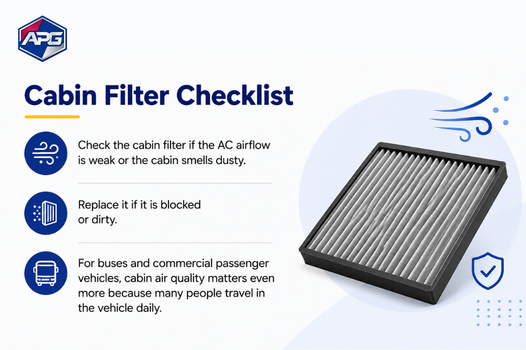
Check the cabin filter if the AC airflow is weak or the cabin smells dusty. Replace it if it is blocked or dirty. For buses and commercial passenger vehicles, cabin air quality matters even more because many people travel in the vehicle daily.
A clean cabin filter improves comfort and makes long drives easier for drivers.
6. Hydraulic and Machinery Filter Checklist
For heavy machinery, loaders, graders, tractors, and industrial equipment, hydraulic filters are also important. These filters help protect hydraulic systems from dirt and particles.
A dirty hydraulic filter can affect machine movement, lifting power, and overall performance. In construction or agricultural work, this can create delays and repair costs.
Workshop checklist:
Inspect hydraulic filters during machine service. Check for slow hydraulic response, unusual noise, leakage, or weak lifting performance. Replace filters according to machine usage and operating conditions.
Machinery like Caterpillar graders, generators, and loaders need proper filter care because they often work in dusty and high-pressure environments.
7. Make a Filter Replacement Record
Workshops and fleet owners should keep a simple record of filter replacement. This helps avoid missed service and repeated problems.
The record should include vehicle number, filter type, replacement date, mileage or working hours, part number, and next service reminder.
This is very useful for fleets because one business may have many vehicles. Without a record, it becomes difficult to know which truck, bus, or machine needs service next.
8. Use the Correct Filter for Each Vehicle
One of the biggest mistakes in heavy vehicle maintenance is using the wrong filter. A filter may look similar but still have different size, thread, sealing, airflow, or pressure requirements.
Wrong filters can cause leakage, poor filtration, weak performance, or engine damage.
Always match the filter with the vehicle model, engine type, old filter number, or OEM reference. Automotive Parts Group provides filter options for heavy vehicles, commercial fleets, trucks, buses, generators, and machinery, including filters for Cummins, Caterpillar, Hino, FAW, Foton, Daewoo, Ford, and tractor applications.
9. Train Drivers to Notice Early Signs
Drivers spend the most time with the vehicle, so they can notice early warning signs before a major breakdown happens.
Fleet owners should train drivers to report weak pickup, black smoke, hard starting, overheating, rough engine sound, AC airflow issues, fuel leakage, or warning lights.
When drivers report issues early, workshops can inspect filters before the problem becomes expensive.
Final Thoughts
Heavy vehicle filters are not just basic maintenance parts. They protect engines, fuel systems, hydraulic systems, and driver comfort. For workshops and fleet owners, replacing filters on time means fewer breakdowns, better performance, and lower repair costs.
A good filter replacement checklist should include air filters, oil filters, fuel filters, water separator filters, cabin filters, and hydraulic filters where needed. With the right schedule and correct parts, heavy vehicles can stay road-ready and business operations can continue smoothly.
Automotive Parts Group helps workshops and fleet owners find reliable filters for heavy-duty vehicles, commercial trucks, buses, generators, and machinery.
FAQs
Which filters are most important in heavy vehicles?
Air filters, oil filters, fuel filters, and water separator filters are the most important for heavy-duty engines.
Why do heavy vehicles need frequent filter replacement?
Heavy vehicles work under load, travel long distances, and often operate in dusty areas, so filters get dirty faster.
What happens if a fuel filter is blocked?
A blocked fuel filter can cause hard starting, weak power, engine jerking, and sudden shutdown.
Are water separator filters necessary for diesel engines?
Yes, water separator filters help remove water from diesel and protect injectors and fuel system parts.
How can fleet owners manage filter replacement?
Fleet owners should keep a service record with vehicle number, filter type, replacement date, mileage, and next service schedule.