
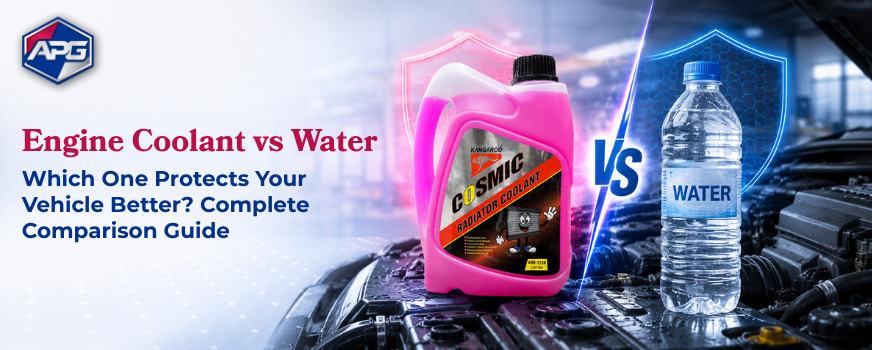
The engine is the heart of every vehicle, and maintaining the correct operating temperature is essential for reliable performance. Whether you drive a passenger car, operate a commercial truck, manage a bus fleet, or use agricultural machinery, the cooling system plays a critical role in protecting the engine.
Many vehicle owners believe that ordinary water is enough to keep an engine cool. While water can transfer heat effectively, using only water in a cooling system does not provide complete protection.
Modern engines require more than simple temperature control. They need protection against corrosion, rust, freezing, overheating, and mineral buildup.
This is where engine coolant becomes important.
The difference between engine coolant vs water is not only about cooling ability. It is about protecting the entire cooling system and ensuring long-term engine reliability.
In this guide, we will explain how coolant and water work, their differences, advantages, disadvantages, and why choosing the correct coolant is important for cars, trucks, buses, tractors, and machinery.
APG OEM provides vehicle maintenance solutions, including coolants designed to support different automotive applications.
What Is Engine Coolant?
Engine coolant is a specially formulated liquid designed to regulate engine temperature while protecting the cooling system.
It is commonly made from:
- Ethylene glycol or propylene glycol
- Water
- Corrosion inhibitors
- Anti-foam additives
- Other performance-enhancing chemicals
Coolant is often mixed with water because the combination provides better temperature protection compared to using water alone.
The main purpose of coolant is to absorb heat from the engine and transfer it to the radiator, where the heat is released.
However, cooling is only one part of its job.
A good coolant also helps protect:
- Radiator components
- Water pump
- Cooling passages
- Engine block
- Hoses
- Seals
Modern vehicles depend on coolant because engines operate at high temperatures and require stable temperature control.
What Is Water Used for in an Engine Cooling System?
Water has excellent heat-transfer properties, which is why it can remove heat from an engine.
For many years, people used plain water in vehicle cooling systems because it was easily available and inexpensive.
Water can temporarily help prevent overheating, especially in emergencies.
However, using only water has several limitations.
Plain water does not contain additives that protect the cooling system from:
- Rust
- Corrosion
- Mineral deposits
- Freezing temperatures
- Cavitation damage
Over time, these problems can reduce cooling efficiency and damage expensive components.
For short-term emergency situations, water may help, but it is not the ideal long-term solution for modern vehicles.
Engine Coolant vs Water: Key Differences
Although both coolant and water help control engine temperature, their performance is very different.
1. Temperature Protection
The primary purpose of a cooling system is maintaining the correct engine temperature.
Water absorbs heat effectively, but it has limitations.
Water:
- Can boil at high temperatures
- Can freeze in cold weather
- Provides limited protection
Coolant:
- Provides better boiling protection
- Reduces freezing risk
- Maintains stable performance across temperature changes
Vehicles operating in extreme conditions require coolant because engines experience significant temperature fluctuations.
For example:
- Trucks operating long distances
- Agricultural tractors working outdoors
- Construction equipment exposed to heat
need reliable cooling protection throughout operation.
2. Corrosion Protection
One of the biggest advantages of coolant over water is corrosion protection.
Cooling systems contain different metals, including:
- Aluminium
- Steel
- Copper
- Iron
When plain water remains inside the system for long periods, it can encourage rust and corrosion.
Corrosion can damage:
- Radiators
- Water pumps
- Engine passages
- Cooling system seals
Engine coolant contains corrosion inhibitors that help protect these components.
This is especially important for commercial vehicles that operate continuously.
3. Boiling Point Protection
Engines generate extremely high temperatures during operation.
If the cooling liquid reaches boiling point, it can create steam pockets that reduce cooling efficiency.
Water can boil under extreme engine conditions.
Coolant mixtures increase the boiling protection of the cooling system, helping prevent overheating.
This becomes especially important in:
- Heavy traffic conditions
- Hot climates
- Heavy-load transportation
- Agricultural operations
A truck carrying heavy cargo, for example, produces much more heat than a small passenger car.
4. Freezing Protection
Although freezing temperatures may not be a major concern in every region, coolant provides important protection in colder environments.
Water expands when it freezes, which can create pressure inside the cooling system.
This may damage:
- Radiators
- Engine blocks
- Cooling passages
Coolant helps maintain liquid stability under a wider temperature range.
5. Mineral and Scale Prevention
Water quality varies depending on location.
Hard water can contain minerals such as:
- Calcium
- Magnesium
- Other dissolved particles
When used regularly in cooling systems, these minerals can create deposits.
These deposits can reduce:
- Cooling efficiency
- Radiator performance
- Coolant circulation
Coolant formulations help reduce these issues and maintain cleaner cooling system operation.
Engine Coolant vs Water Comparison Table
| Feature | Engine Coolant | Plain Water |
| Heat Transfer | Excellent with controlled performance | Good but limited |
| Boiling Protection | Higher boiling point protection | Lower boiling point |
| Freezing Protection | Protects against freezing | Can freeze and expand |
| Corrosion Protection | Contains protective additives | Can cause rust over time |
| Mineral Deposit Control | Helps reduce buildup | Can create scale deposits |
| Engine Safety | Designed for modern engines | Limited long-term protection |
| Service Life | Designed for extended use | Requires frequent replacement |
| Suitable Applications | Cars, trucks, buses, tractors, machinery | Emergency temporary use |
Why Is Coolant Better Than Water for Modern Engines?
Modern engines are designed to operate at specific temperature ranges. Maintaining this balance is important because both excessive heat and low operating temperatures can affect performance.
Using only water may appear like a cost-saving option, but it can create problems over time.
For example, a vehicle that regularly operates with plain water may experience:
- Cooling system corrosion
- Reduced radiator efficiency
- Water pump damage
- Rust formation
- Increased maintenance costs
Coolant provides a protective layer that supports the entire cooling system, not just temperature control.
This is why manufacturers recommend using the correct coolant specification instead of relying on water alone.
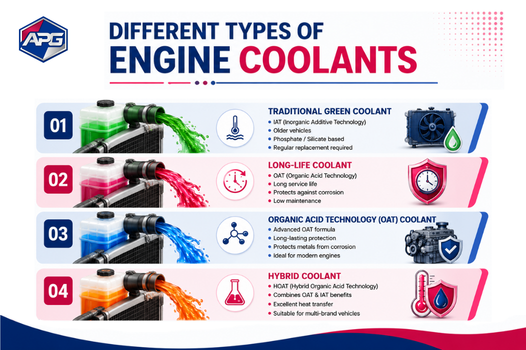
Different Types of Engine Coolants
Not all coolants are identical. Different vehicles and engines may require different coolant technologies.
Choosing the correct coolant depends on:
- Vehicle manufacturer recommendations
- Engine type
- Cooling system design
- Operating environment
Some common coolant categories include:
1. Traditional Green Coolant
Traditional green coolant is commonly associated with older vehicle cooling systems.
It usually contains inorganic additives designed to provide corrosion protection.
It may be suitable for certain older vehicles, but it should only be used when it matches the manufacturer’s recommendation.
Mixing different coolant types without proper knowledge can reduce performance.
2. Long-Life Coolant
Long-life coolants are designed to provide extended service intervals.
They often use advanced additive technology to provide:
- Longer protection
- Improved corrosion resistance
- Better stability
Many modern vehicles use long-life coolant because manufacturers design their cooling systems around these formulations.
3. Organic Acid Technology (OAT) Coolant
OAT coolants use organic corrosion inhibitors and are commonly used in many modern vehicles.
Benefits may include:
- Longer service life
- Reduced maintenance frequency
- Effective protection for modern engine materials
However, compatibility should always be checked before use.
4. Hybrid Coolant
Hybrid coolants combine different additive technologies to provide balanced protection.
They are used in various vehicle applications where manufacturers require specific cooling characteristics.
Why Mixing Different Coolants Can Be Dangerous
One common mistake vehicle owners make is mixing different coolant types without checking compatibility.
Different coolant technologies may use different chemical formulations.
Mixing incompatible coolants can lead to:
- Reduced corrosion protection
- Sludge formation
- Blocked coolant passages
- Reduced cooling performance
Before topping up or replacing coolant, always check:
- Existing coolant type
- Vehicle manual recommendations
- Manufacturer specifications
If you are unsure, consult a professional or parts supplier.
Engine Coolant vs Water for Trucks and Heavy Vehicles
Heavy-duty vehicles experience much greater cooling demands compared to passenger cars.
Trucks, buses, and industrial vehicles often operate:
- For longer hours
- Under heavier loads
- In higher temperatures
- Across long distances
During these conditions, the engine produces significant heat.
Using only water may not provide sufficient protection for heavy-duty cooling systems.
Commercial vehicles require coolant solutions that help maintain temperature stability and protect expensive engine components.
APG OEM supports different vehicle maintenance requirements with products such as automotive coolants designed for reliable cooling system performance.
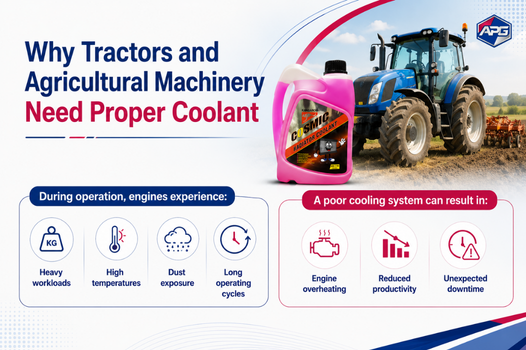
Why Tractors and Agricultural Machinery Need Proper Coolant
Agricultural machinery operates in some of the toughest conditions.
Tractors and farming equipment may work continuously for many hours during planting and harvesting seasons.
During operation, engines experience:
- Heavy workloads
- High temperatures
- Dust exposure
- Long operating cycles
A poor cooling system can result in:
- Engine overheating
- Reduced productivity
- Unexpected downtime
Using the correct coolant helps agricultural equipment maintain stable temperatures during demanding work.
For complete vehicle maintenance, operators should also consider proper filtration solutions such as tractor filters to protect engines from contaminants.
Signs Your Vehicle May Have a Cooling System Problem
Even with coolant, regular inspection is important.
Common warning signs include:
Rising Temperature Gauge
If the temperature gauge frequently moves into the hot zone, there may be a cooling system issue.
Possible causes include:
- Low coolant level
- Damaged radiator
- Faulty thermostat
- Water pump problems
Coolant Leaks
Visible fluid under the vehicle may indicate:
- Damaged hoses
- Radiator leaks
- Loose connections
- Seal problems
Ignoring leaks can lead to serious overheating.
Steam From the Engine Area
Steam usually indicates excessive heat and requires immediate attention.
Continuing to drive an overheating vehicle can cause severe engine damage.
Sweet Smell From Engine Area
Coolant often has a distinct smell.
A strong coolant smell may indicate a leak or cooling system problem.
Common Mistakes When Using Engine Coolant
Using Only Water Permanently
Water may work temporarily, but it does not provide complete cooling system protection.
Mixing Different Coolant Types
Always verify compatibility before mixing products.
Ignoring Coolant Replacement
Coolant additives lose effectiveness over time.
Using Poor-Quality Coolant
Low-quality coolant may not provide adequate corrosion protection.
Not Checking Coolant Levels
Low coolant levels can quickly lead to overheating.
How Often Should Engine Coolant Be Replaced?
The replacement interval depends on:
- Vehicle manufacturer recommendations
- Coolant type
- Driving conditions
- Engine design
- Operating environment
Some long-life coolants can last significantly longer than traditional formulations.
However, vehicle owners should regularly check:
- Coolant level
- Coolant colour
- Signs of contamination
- Leakage
Regular inspection helps identify problems before they become expensive repairs.
Additional Maintenance Tips for Better Cooling System Performance
A good coolant system works best when combined with proper vehicle maintenance.
Vehicle owners should:
- Check coolant levels regularly
- Inspect radiator hoses
- Keep the radiator clean
- Monitor temperature changes
- Replace damaged components
- Use manufacturer-recommended coolant
A complete maintenance routine also includes checking other important components such as filters.
For example, clean airflow through quality air filters helps maintain proper engine operation.
Frequently Asked Questions (FAQs)
Is coolant better than water for a car engine?
Yes. Coolant provides additional protection against overheating, corrosion, freezing, and mineral deposits that plain water cannot provide.
Can I use water instead of coolant?
Water can be used temporarily in emergencies, but it is not recommended as a permanent replacement.
What happens if I only use water in my radiator?
Using only water may lead to corrosion, mineral buildup, reduced cooling efficiency, and possible engine damage over time.
Does coolant improve engine performance?
Coolant helps maintain the correct engine temperature, allowing the engine to operate more efficiently.
Can I mix different coolant colours?
Not always. Coolant colour does not always indicate compatibility. Always check the coolant specification before mixing.
How often should coolant be changed?
The replacement interval depends on the coolant type and vehicle manufacturer recommendations.
Is coolant necessary for trucks and buses?
Yes. Heavy vehicles produce more heat and require reliable cooling protection during long operating hours.
Can coolant prevent engine overheating?
Proper coolant helps reduce overheating risk, but overheating can also result from radiator problems, leaks, thermostat issues, or other mechanical failures.
Conclusion
When comparing engine coolant vs water, coolant provides far greater protection for modern vehicles.
While water can absorb heat, it does not provide the corrosion protection, temperature stability, and long-term system protection required by today’s engines.
Cars, trucks, buses, tractors, and machinery all depend on effective cooling systems to maintain performance and reliability.
Using the correct coolant helps:
- Protect engine components
- Prevent corrosion
- Reduce overheating risks
- Improve cooling system life
- Support better vehicle reliability
Choosing the right maintenance products is an important part of protecting your investment.
Explore APG OEM’s range of coolants and vehicle maintenance products for reliable cooling system support.
For help selecting the right coolant or maintenance solution for your vehicle, contact APG OEM with your vehicle details and requirements.