
Introduction
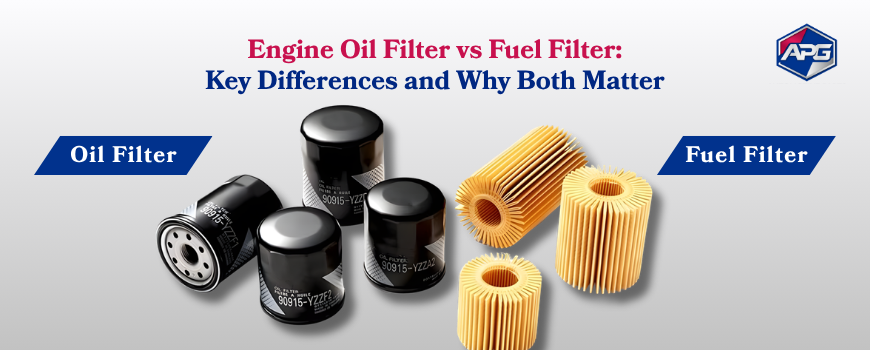
When it comes to vehicle maintenance, filters play a crucial role in protecting the engine and ensuring smooth performance. Two of the most important filters are the oil filter and the fuel filter. Many car owners are familiar with these components, but not everyone understands the difference between them.
Understanding engine oil filter vs fuel filter helps you make better maintenance decisions, improve engine efficiency, and avoid costly repairs. Each filter serves a unique purpose, and both are essential for the overall health of your vehicle.
In Pakistan’s driving conditions, where dust, impurities, and varying fuel quality are common, maintaining both filters becomes even more important.
What is an Engine Oil Filter?
An engine oil filter is responsible for removing contaminants such as dirt, metal particles, and sludge from the engine oil. Clean oil is essential for lubricating engine components and reducing friction.
Key Functions:
- Filters impurities from engine oil
- Protects internal engine parts
- Maintains smooth engine operation
- Extends engine life
What is a Fuel Filter?
A fuel filter removes dirt, rust, and other contaminants from fuel before it reaches the engine. Clean fuel is essential for efficient combustion and engine performance.
Key Functions:
- Cleans fuel before it enters the engine
- Protects fuel injectors
- Ensures proper combustion
- Improves fuel efficiency
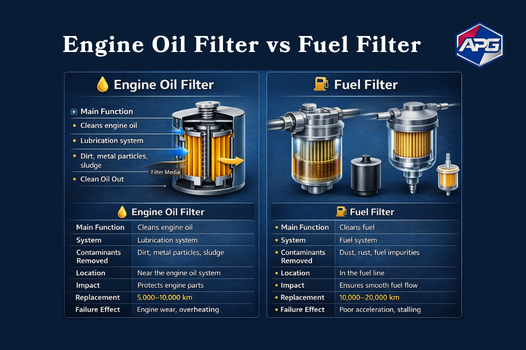
Engine Oil Filter vs Fuel Filter (Comparison Table)
| Feature | Engine Oil Filter | Fuel Filter |
| Main Function | Cleans engine oil | Cleans fuel |
| System | Lubrication system | Fuel system |
| Contaminants Removed | Dirt, metal particles, sludge | Dust, rust, fuel impurities |
| Location | Near the engine oil system | In the fuel line |
| Impact | Protects engine parts | Ensures smooth fuel flow |
| Replacement Interval | 5,000–10,000 km | 10,000–20,000 km |
| Failure Effect | Engine wear, overheating | Poor acceleration, stalling |
Why Both Filters Are Important
Both filters perform different roles but are equally critical. Maintaining both ensures:
- Better engine performance
- Improved fuel efficiency
- Reduced wear and tear
- Lower maintenance costs
Ignoring either one can lead to serious performance issues.
Signs of a Faulty Oil Filter
- Dirty or thick engine oil
- Engine overheating
- Reduced performance
- Increased engine noise
Signs of a Faulty Fuel Filter
- Engine hesitation
- Difficulty starting
- Poor acceleration
- Reduced fuel efficiency
Replacement Intervals
Oil Filter:
- Every 5,000 to 10,000 kilometers
- With every oil change
Fuel Filter:
- Every 10,000 to 20,000 kilometers
- Earlier in poor fuel conditions
Impact of Pakistani Driving Conditions
Dust, traffic congestion, and inconsistent fuel quality in Pakistan can accelerate filter wear. This makes regular maintenance of both oil and fuel filters even more important.
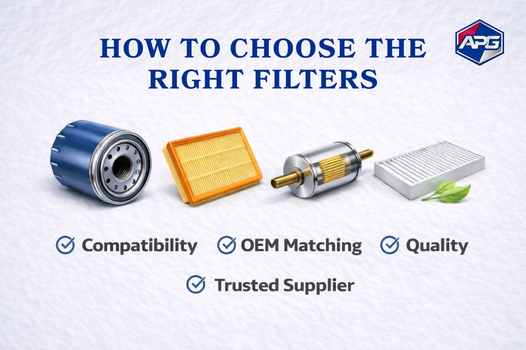
How to Choose the Right Filters
Compatibility
Always match the filter with your vehicle model
OEM Matching
Ensure proper fit and performance
Quality
Choose durable and reliable filters
Trusted Supplier
Buy from reliable automotive parts providers
Common Mistakes to Avoid
- Ignoring replacement schedules
- Choosing low-quality filters
- Not checking compatibility
- Delaying maintenance
Benefits of Using High-Quality Filters
- Better engine protection
- Improved performance
- Reduced maintenance costs
- Longer vehicle lifespan
Conclusion
Understanding the difference between engine oil filter vs fuel filter is essential for proper vehicle maintenance. Both filters play a vital role in protecting the engine, improving performance, and ensuring efficient operation.
At Automotive Parts Group, we provide high-quality automotive filters designed to meet the needs of both passenger vehicles and heavy-duty machinery. Our commitment to quality ensures reliable performance in all driving conditions.
By maintaining both oil and fuel filters regularly, you can improve your vehicle’s efficiency, reduce breakdowns, and extend engine life.